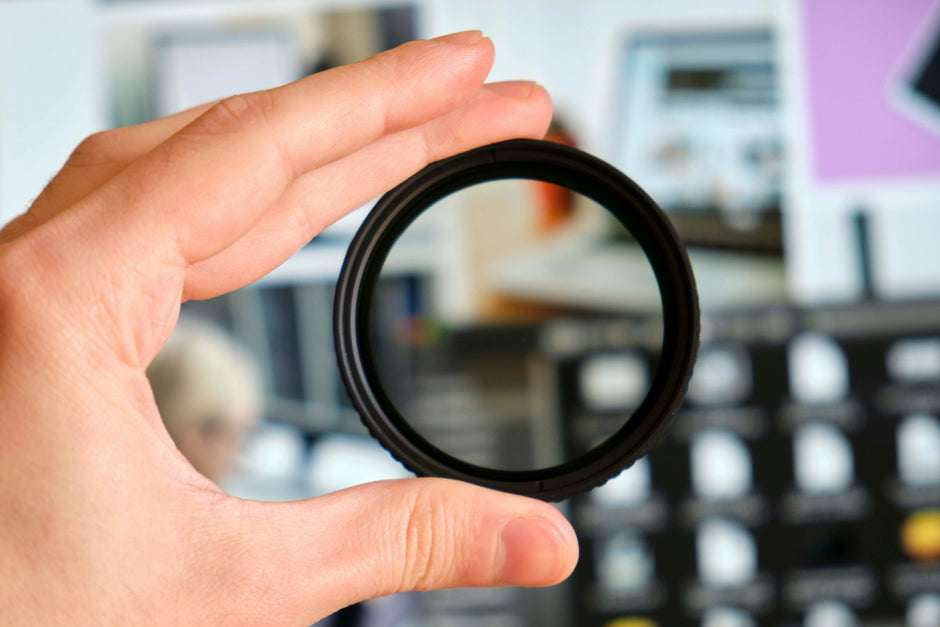
Variable ND filters are one of the most useful and certainly most used accessories by professional videomakers, just like a gimbal or a microphone. Let's find out why!
Let's start by specifying that, broadly speaking, variable ND filters are two simple polarizing filters placed one on top of the other, which, by rotating, cause a greater or lesser variation in the stops of brightness that pass through the filters themselves.
This accessory is useful when, by force of circumstance, we have to shoot in bright light or at a particular time of day that does not allow us to find a setting suitable for the shooting style we prefer (e.g., shooting with a generous aperture or at 1/25 of a second as shutter speed).
Some variable NDs can even remove 10 stops of light for total scene control even in truly critical situations.
ND filters are divided based on various characteristics:
- How many stops they can remove from the scene (ND1-ND8 or ND2-ND6)
- Diameter and threading
- Glass quality
The choice of the ND stop range depends heavily on the lens's f-number used and the shooting needs. If we need to use an f/1.4 lens at full aperture, we must choose a variable ND with the maximum stop value.
Obviously and necessarily, the choice of a variable ND must also be made based on the diameter of the lens, which has a thread to accommodate only that diameter of filters.
Last but not least, the choice also falls on the quality of the glass; filters of all qualities exist, but let's be careful to find one that can satisfy our needs.