
Description
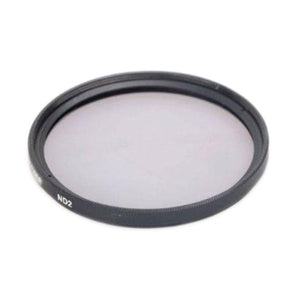
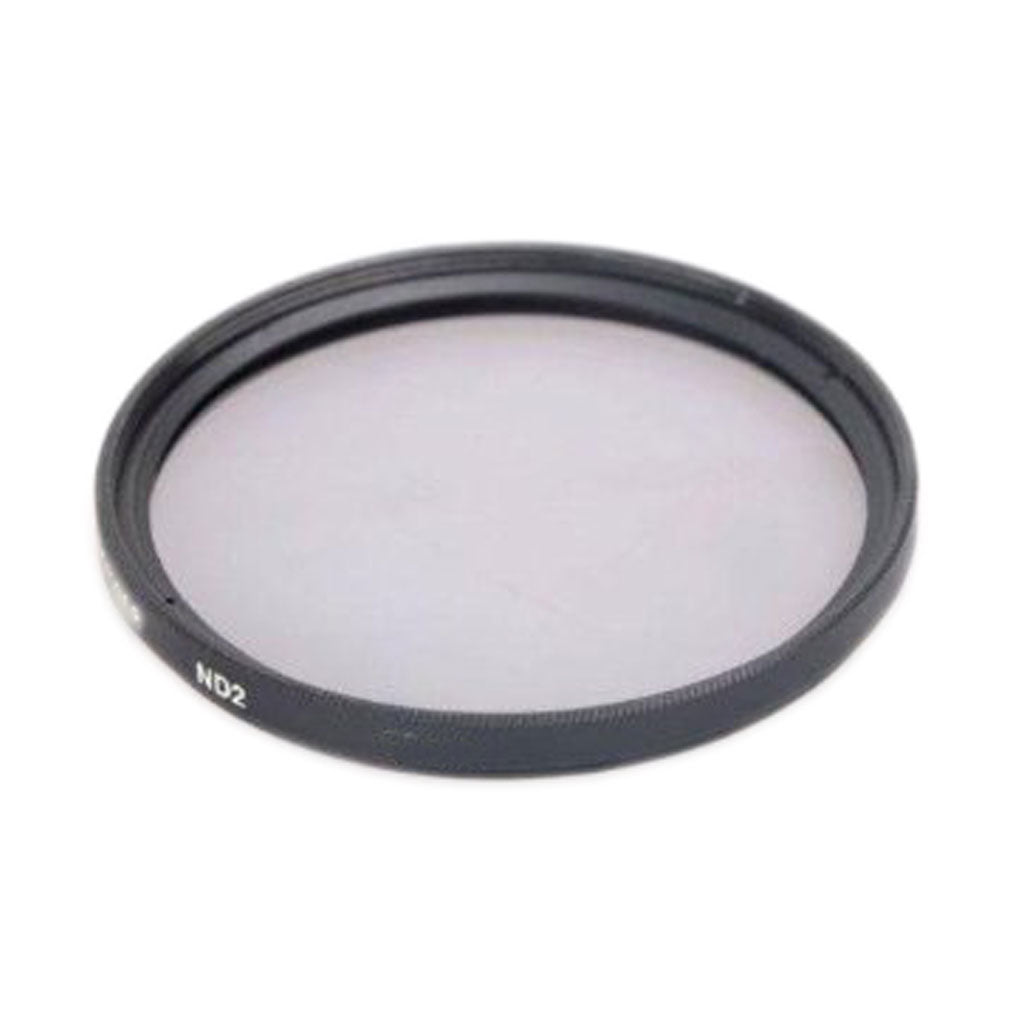
Take ND2 Filter for Lenses with 52mm Diameter
Take ND2 Filter for Lenses with 52mm Diameter
ND filters (Neutral Density) come in both circular, screw-on forms and as plate filters with a neutral gray tint; this means that this type of filter, if of good quality, will not introduce color casts to the image.
The gray tint is uniform across the entire surface of the filter and, depending on its intensity, will allow for more or less pronounced effects. The purpose of an ND filter is to reduce stops of light; it is used in situations where we want to use slow shutter speeds even when environmental conditions would not normally allow it. For example, imagine being on a very sunny day and wanting to use shutter speeds in the order of 10 seconds: even with the aperture fully closed and using the lowest ISO sensitivity, we probably wouldn't achieve this.
With this filter, however, we will reduce the light in the scene, always taking into account the intensity of the ND filter, thus allowing us to use slow shutter speeds even on very sunny days. Different but with the same concept as the previous example, this filter also allows us to use very wide apertures in the presence of a lot of light, in all those occasions where low ISO and the fastest possible shutter speed are still not enough to use the widest possible aperture without overexposing the photo. The creative effects that such a filter can reproduce include, for example, water with a silky effect due to the slow exposure time, the movement of clouds that provide a lot of dynamism thanks to both the slow time and their movement, and all those situations where a slow time is not academically expected, due to ambient light conditions and image type.
Useful Information:
A photographic filter is an optical accessory that, when placed in front of the lens, is able to make a certain modification to the captured image. Its peculiarity is to selectively let light pass through in order to modify what actually reaches the sensitive medium. By saying that no software can perfectly emulate the effect of filters, we confirm that: the modifications we make to the image directly during shooting, by modifying the light with the aid of a filter, will be more real and will maintain the original quality of the file (in the digital realm).
If, on the other hand, we tried to reproduce an effect through post-production, we would realize that the more we modify the file, the more the general quality will suffer, and even using a .RAW file, we would inevitably find ourselves having to deal with the appearance of artifacts and the degradation of the photo's quality. The most common filters in photography are numerous but share a common characteristic: the way they are applied to the lens. There are mainly two types: screw-on filters and plate filters, which require an additional accessory to be used.
Take ND2 Filter for Lenses with 52mm Diameter
Take ND2 Filter for Lenses with 52mm Diameter
ND filters (Neutral Density) come in both circular, screw-on forms and as plate filters with a neutral gray tint; this means that this type of filter, if of good quality, will not introduce color casts to the image.
The gray tint is uniform across the entire surface of the filter and, depending on its intensity, will allow for more or less pronounced effects. The purpose of an ND filter is to reduce stops of light; it is used in situations where we want to use slow shutter speeds even when environmental conditions would not normally allow it. For example, imagine being on a very sunny day and wanting to use shutter speeds in the order of 10 seconds: even with the aperture fully closed and using the lowest ISO sensitivity, we probably wouldn't achieve this.
With this filter, however, we will reduce the light in the scene, always taking into account the intensity of the ND filter, thus allowing us to use slow shutter speeds even on very sunny days. Different but with the same concept as the previous example, this filter also allows us to use very wide apertures in the presence of a lot of light, in all those occasions where low ISO and the fastest possible shutter speed are still not enough to use the widest possible aperture without overexposing the photo. The creative effects that such a filter can reproduce include, for example, water with a silky effect due to the slow exposure time, the movement of clouds that provide a lot of dynamism thanks to both the slow time and their movement, and all those situations where a slow time is not academically expected, due to ambient light conditions and image type.
Useful Information:
A photographic filter is an optical accessory that, when placed in front of the lens, is able to make a certain modification to the captured image. Its peculiarity is to selectively let light pass through in order to modify what actually reaches the sensitive medium. By saying that no software can perfectly emulate the effect of filters, we confirm that: the modifications we make to the image directly during shooting, by modifying the light with the aid of a filter, will be more real and will maintain the original quality of the file (in the digital realm).
If, on the other hand, we tried to reproduce an effect through post-production, we would realize that the more we modify the file, the more the general quality will suffer, and even using a .RAW file, we would inevitably find ourselves having to deal with the appearance of artifacts and the degradation of the photo's quality. The most common filters in photography are numerous but share a common characteristic: the way they are applied to the lens. There are mainly two types: screw-on filters and plate filters, which require an additional accessory to be used.
SKU:ND2 52mm
Kobo ND2 Filter for Lenses with 52mm Diameter
- Regular price
- €6,70
- Sale price
- €6,70
- Regular price
-
Hai trovato un prezzo migliore?

Take ND2 Filter for Lenses with 52mm Diameter
Take ND2 Filter for Lenses with 52mm Diameter
ND filters (Neutral Density) come in both circular, screw-on forms and as plate filters with a neutral gray tint; this means that this type of filter, if of good quality, will not introduce color casts to the image.
The gray tint is uniform across the entire surface of the filter and, depending on its intensity, will allow for more or less pronounced effects. The purpose of an ND filter is to reduce stops of light; it is used in situations where we want to use slow shutter speeds even when environmental conditions would not normally allow it. For example, imagine being on a very sunny day and wanting to use shutter speeds in the order of 10 seconds: even with the aperture fully closed and using the lowest ISO sensitivity, we probably wouldn't achieve this.
With this filter, however, we will reduce the light in the scene, always taking into account the intensity of the ND filter, thus allowing us to use slow shutter speeds even on very sunny days. Different but with the same concept as the previous example, this filter also allows us to use very wide apertures in the presence of a lot of light, in all those occasions where low ISO and the fastest possible shutter speed are still not enough to use the widest possible aperture without overexposing the photo. The creative effects that such a filter can reproduce include, for example, water with a silky effect due to the slow exposure time, the movement of clouds that provide a lot of dynamism thanks to both the slow time and their movement, and all those situations where a slow time is not academically expected, due to ambient light conditions and image type.
Useful Information:
A photographic filter is an optical accessory that, when placed in front of the lens, is able to make a certain modification to the captured image. Its peculiarity is to selectively let light pass through in order to modify what actually reaches the sensitive medium. By saying that no software can perfectly emulate the effect of filters, we confirm that: the modifications we make to the image directly during shooting, by modifying the light with the aid of a filter, will be more real and will maintain the original quality of the file (in the digital realm).
If, on the other hand, we tried to reproduce an effect through post-production, we would realize that the more we modify the file, the more the general quality will suffer, and even using a .RAW file, we would inevitably find ourselves having to deal with the appearance of artifacts and the degradation of the photo's quality. The most common filters in photography are numerous but share a common characteristic: the way they are applied to the lens. There are mainly two types: screw-on filters and plate filters, which require an additional accessory to be used.
Couldn't load pickup availability


Terms and Conditions
Terms and Conditions
