


Description
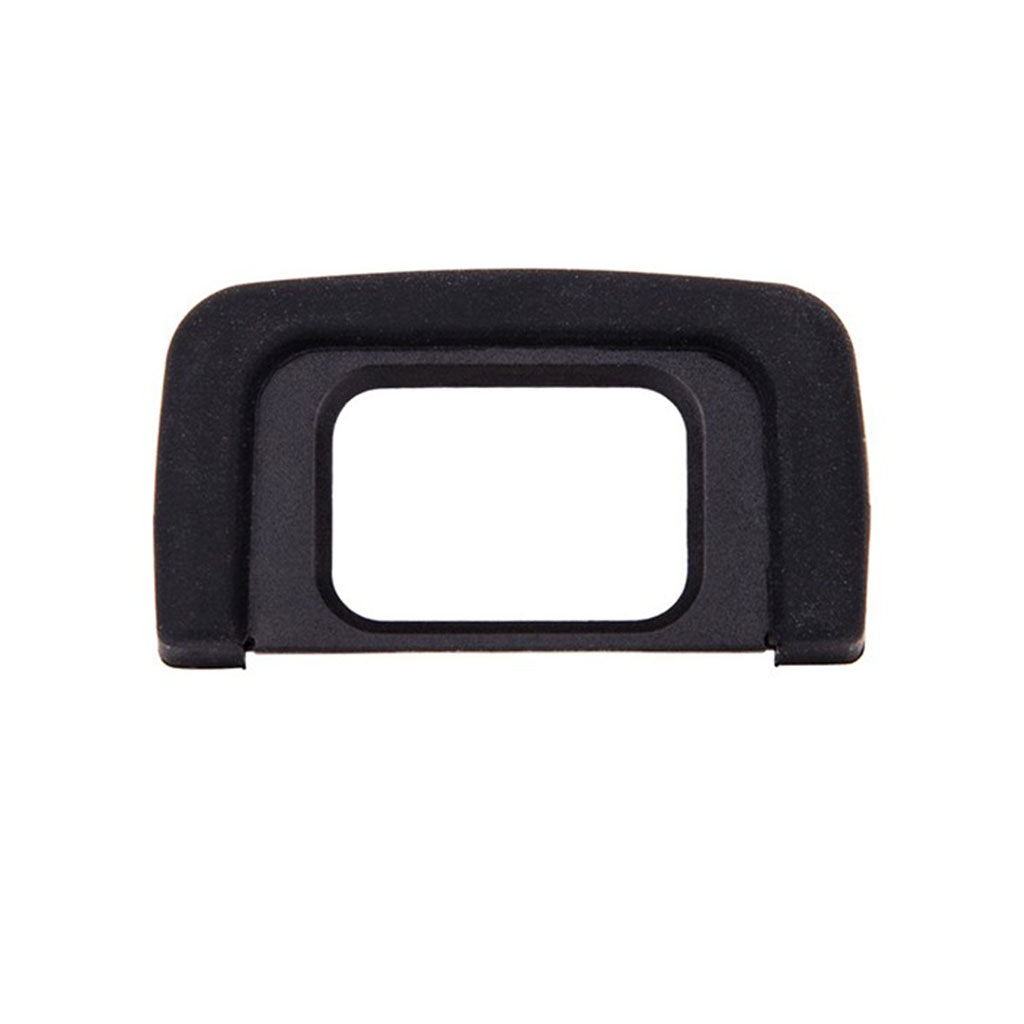
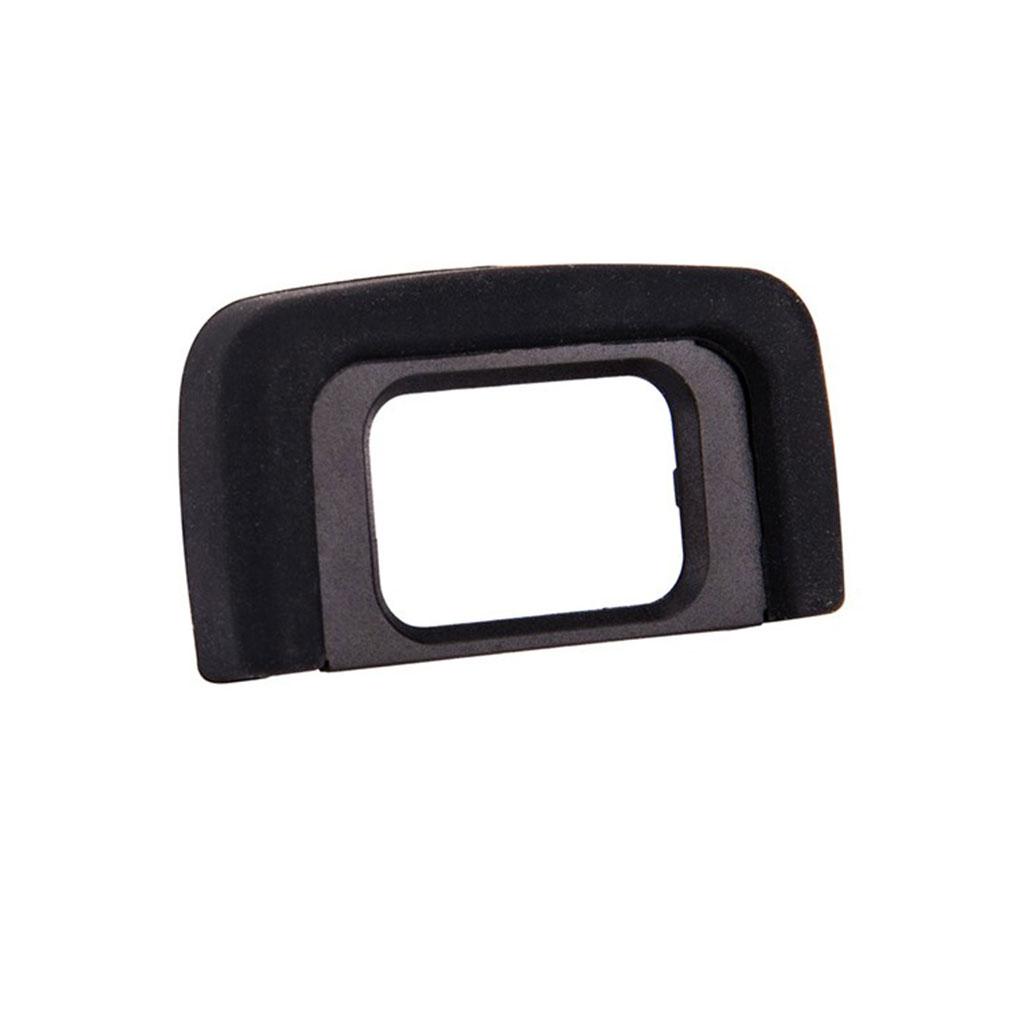
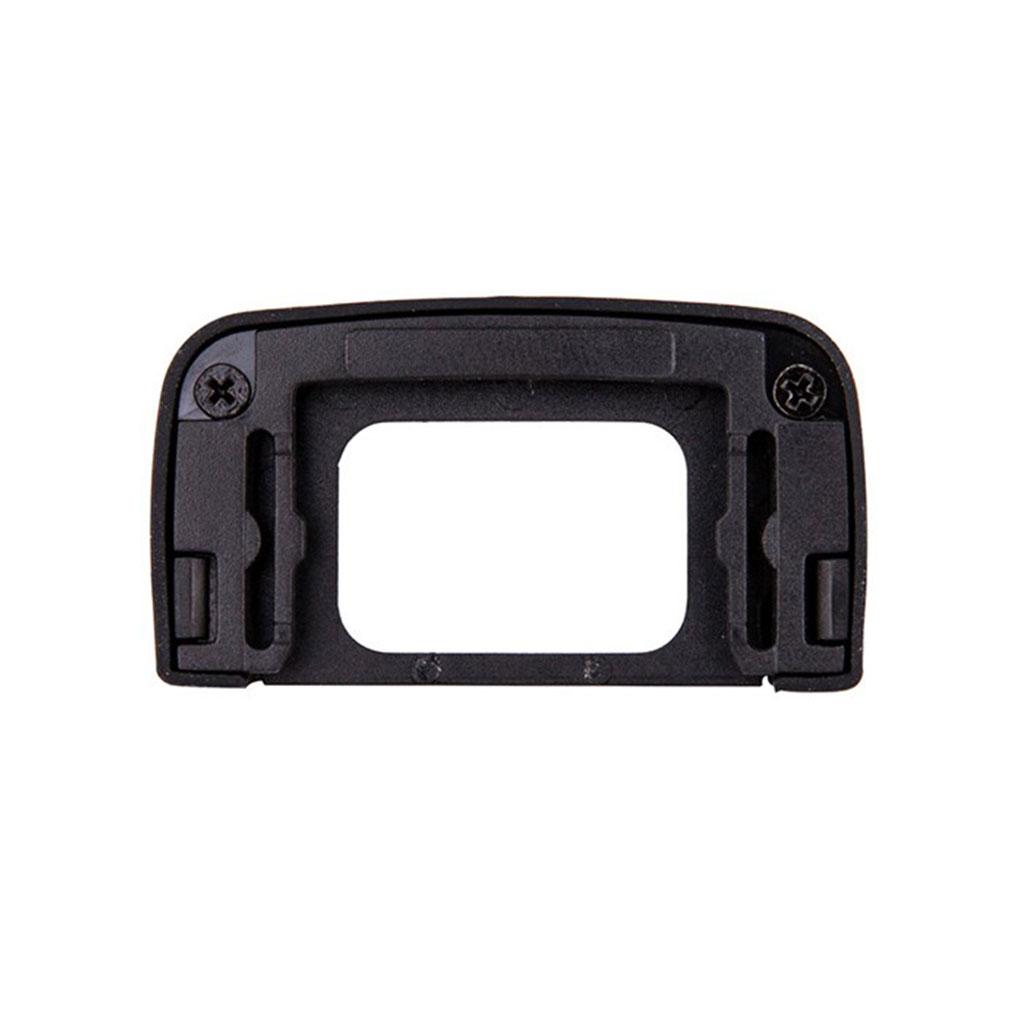
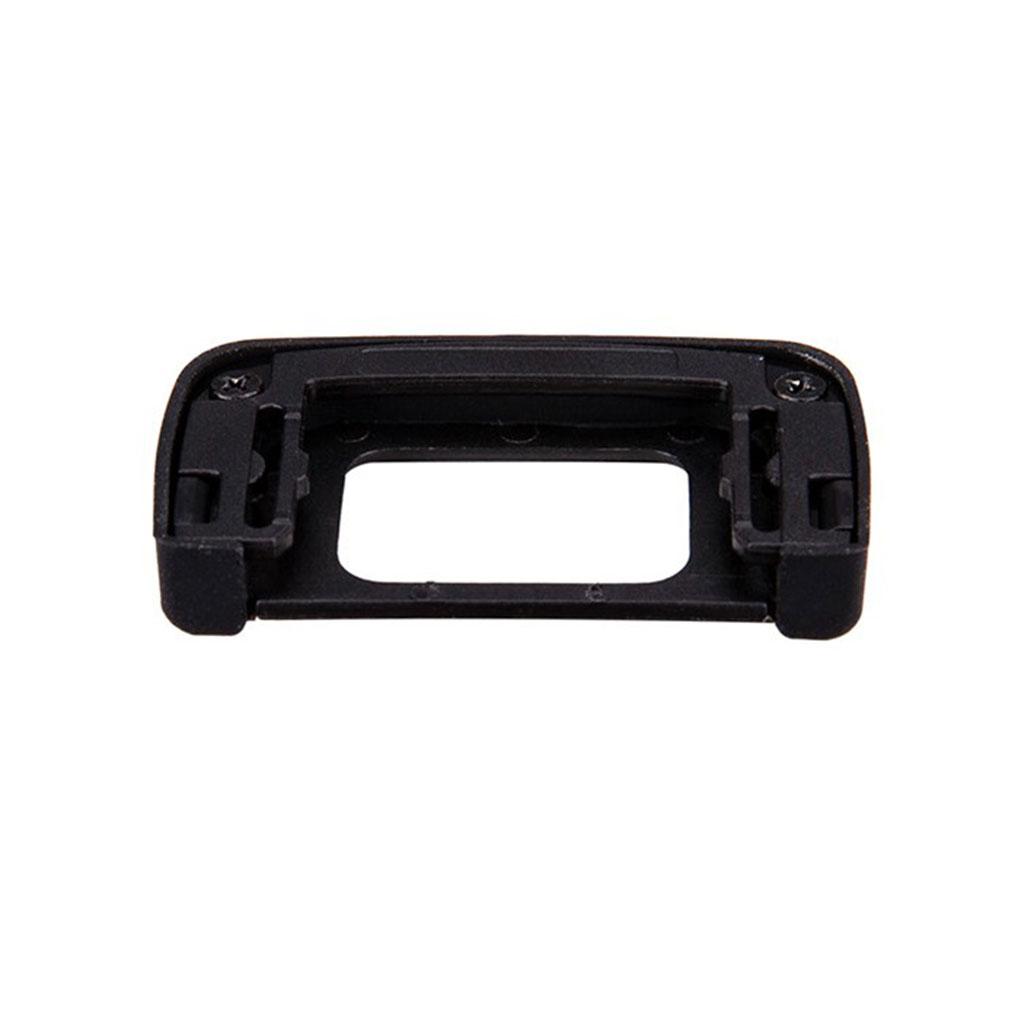
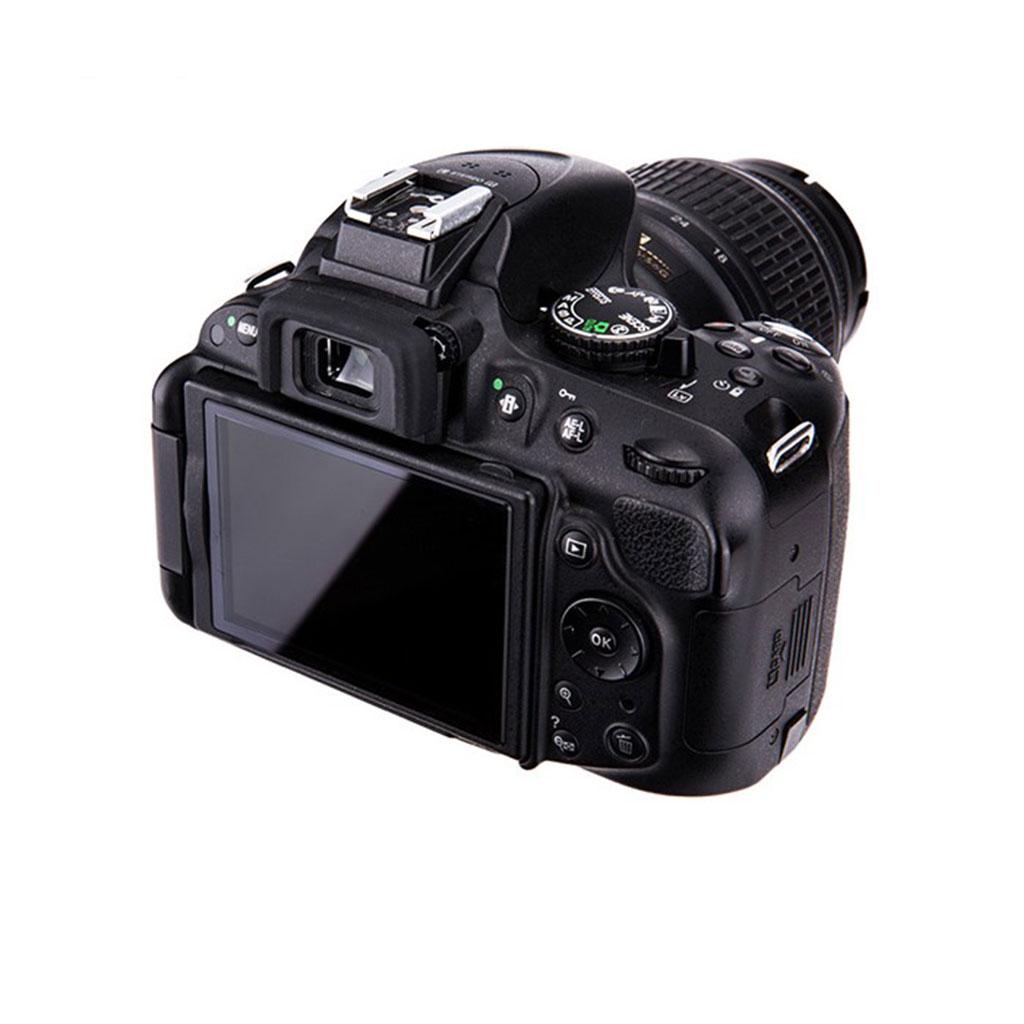
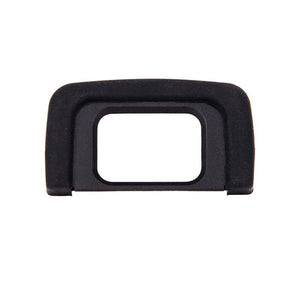
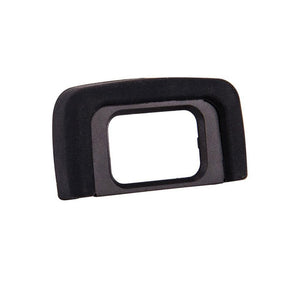
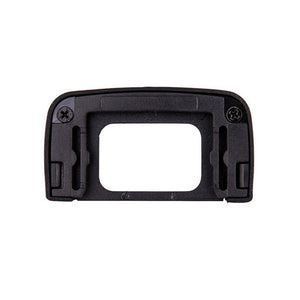
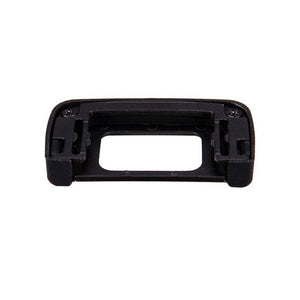
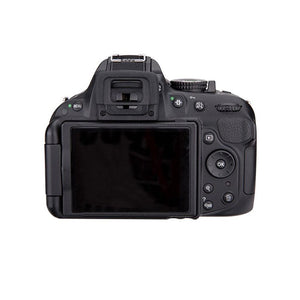
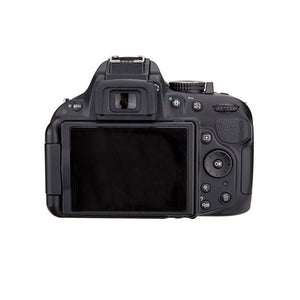
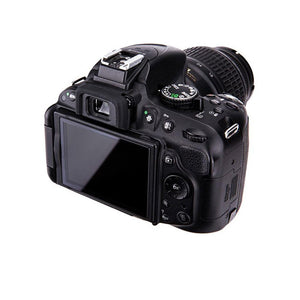
Jjc EN-DK25 Eyecup for Nikon D5500 D3300 D3200 D5300 D5200 D5100 Type DK-25
The Nikon DK-25 eyecup is a replacement for the standard eyecup supplied with many modern Nikon digital cameras. It protects against stray light and provides cushioning for a more comfortable experience when looking through the viewfinder.
Eyecup for the following products:
Nikon D5500 D3300 D3200 D5300 D5200 D5100
Useful Information:
Optical Viewfinder Coverage
Viewfinder coverage is a particularly interesting topic because, contrary to what one might think, 100% scene coverage is rarely offered. Partial optical viewfinder coverage is something that derives from analog SLRs: when negatives were developed, photographic labs tended to enlarge photographs by slightly trimming the edges. It goes without saying that if the photographic lab performs a "crop," having an optical viewfinder that covers more than what we would see in the printed image is an unnecessary waste. With the advent of digital cameras, optical viewfinder coverage has become a problem, however, as the sensor captures everything seen through the lens, and therefore the crop made by a viewfinder that does not cover 100% is effectively an impediment (we photograph more than we see).
For this reason, in recent cameras, viewfinders tend to have increasingly wider coverage, often even 100% (at the expense, of course, of the size and price of the SLRs themselves).
Optical Viewfinder Magnification
Optical viewfinder magnification refers to how large the image appears in the viewfinder itself, in an absolute sense. In practice, for every optical viewfinder, there is a decimal number that is normally less than 1.1X. This decimal number, as one can understand, indicates the size, compared to the real size observed with the naked eye (1X), of the subject being observed. Since magnification varies with the focal length used and the focusing distance, magnification is measured with a 50 mm lens focused at infinity.
For example, a viewfinder with a magnification of 0.5X, when using a 50mm lens focused at infinity, allows you to observe an object at 50% of the size observed with the naked eye (thus much smaller).
Why is viewfinder magnification almost never 1X? The reason lies again in the size of the viewfinder itself: a low magnification viewfinder is decidedly smaller than a viewfinder whose magnification is 1X. And a larger viewfinder, in addition to requiring a bulkier camera body, is also more expensive.
It goes without saying that a viewfinder is more useful the greater its magnification. Unfortunately, very often you will not find the magnification factor directly specified on cameras (including SLRs). Furthermore, in the case of an APS sensor, you must always divide the magnification value by the crop factor, which is 1.6 for Canon and 1.5 for Nikon.
Let's look at a couple of examples:
- Nikon D5000: viewfinder coverage of 95% of the scene and 0.52X magnification
- Nikon D700: viewfinder coverage of 95% of the scene and 0.72X magnification
- Nikon D800: viewfinder coverage of 100% of the scene and 0.70x magnification
as can be seen above, the viewfinder of an APS like the D5000 is decidedly small, too much to be actually used to go beyond "aiming" (composing a photo is quite complex). It should also be noted that even Nikon's top-of-the-range, the D800, does not offer a much larger viewfinder, stopping at 70% magnification.
How to choose the right optical viewfinder
Obviously, choosing the viewfinder is not that easy, considering it is only one part of the camera. In any case, there are some fixed points that you should keep in mind whenever you are in the situation of buying a camera, and in particular:
- Look for a camera with at least a viewfinder with 95% coverage.
- Do not accept magnification less than 0.8X unless coverage is greater than 95%. Never accept less than 0.7X in any case.
- Try to understand what the eye relief is, in millimeters. If it's less than 15mm, forget about it.
- Try to understand if focusing is easily identifiable, when working manually, through the optical viewfinder. With a viewfinder like that of the D5000, it is very difficult to achieve.
- Look for viewfinders with high brightness and contrast, but above all, comfortable for the eyes.
- Compare with other cameras, possibly from different manufacturers. And try to evaluate if the viewfinder you are interested in is really good. Can you, for example, see the entire scene? And the brightness? The contrast? The focus?
Jjc EN-DK25 Eyecup for Nikon D5500 D3300 D3200 D5300 D5200 D5100 Type DK-25
The Nikon DK-25 eyecup is a replacement for the standard eyecup supplied with many modern Nikon digital cameras. It protects against stray light and provides cushioning for a more comfortable experience when looking through the viewfinder.
Eyecup for the following products:
Nikon D5500 D3300 D3200 D5300 D5200 D5100
Useful Information:
Optical Viewfinder Coverage
Viewfinder coverage is a particularly interesting topic because, contrary to what one might think, 100% scene coverage is rarely offered. Partial optical viewfinder coverage is something that derives from analog SLRs: when negatives were developed, photographic labs tended to enlarge photographs by slightly trimming the edges. It goes without saying that if the photographic lab performs a "crop," having an optical viewfinder that covers more than what we would see in the printed image is an unnecessary waste. With the advent of digital cameras, optical viewfinder coverage has become a problem, however, as the sensor captures everything seen through the lens, and therefore the crop made by a viewfinder that does not cover 100% is effectively an impediment (we photograph more than we see).
For this reason, in recent cameras, viewfinders tend to have increasingly wider coverage, often even 100% (at the expense, of course, of the size and price of the SLRs themselves).
Optical Viewfinder Magnification
Optical viewfinder magnification refers to how large the image appears in the viewfinder itself, in an absolute sense. In practice, for every optical viewfinder, there is a decimal number that is normally less than 1.1X. This decimal number, as one can understand, indicates the size, compared to the real size observed with the naked eye (1X), of the subject being observed. Since magnification varies with the focal length used and the focusing distance, magnification is measured with a 50 mm lens focused at infinity.
For example, a viewfinder with a magnification of 0.5X, when using a 50mm lens focused at infinity, allows you to observe an object at 50% of the size observed with the naked eye (thus much smaller).
Why is viewfinder magnification almost never 1X? The reason lies again in the size of the viewfinder itself: a low magnification viewfinder is decidedly smaller than a viewfinder whose magnification is 1X. And a larger viewfinder, in addition to requiring a bulkier camera body, is also more expensive.
It goes without saying that a viewfinder is more useful the greater its magnification. Unfortunately, very often you will not find the magnification factor directly specified on cameras (including SLRs). Furthermore, in the case of an APS sensor, you must always divide the magnification value by the crop factor, which is 1.6 for Canon and 1.5 for Nikon.
Let's look at a couple of examples:
- Nikon D5000: viewfinder coverage of 95% of the scene and 0.52X magnification
- Nikon D700: viewfinder coverage of 95% of the scene and 0.72X magnification
- Nikon D800: viewfinder coverage of 100% of the scene and 0.70x magnification
as can be seen above, the viewfinder of an APS like the D5000 is decidedly small, too much to be actually used to go beyond "aiming" (composing a photo is quite complex). It should also be noted that even Nikon's top-of-the-range, the D800, does not offer a much larger viewfinder, stopping at 70% magnification.
How to choose the right optical viewfinder
Obviously, choosing the viewfinder is not that easy, considering it is only one part of the camera. In any case, there are some fixed points that you should keep in mind whenever you are in the situation of buying a camera, and in particular:
- Look for a camera with at least a viewfinder with 95% coverage.
- Do not accept magnification less than 0.8X unless coverage is greater than 95%. Never accept less than 0.7X in any case.
- Try to understand what the eye relief is, in millimeters. If it's less than 15mm, forget about it.
- Try to understand if focusing is easily identifiable, when working manually, through the optical viewfinder. With a viewfinder like that of the D5000, it is very difficult to achieve.
- Look for viewfinders with high brightness and contrast, but above all, comfortable for the eyes.
- Compare with other cameras, possibly from different manufacturers. And try to evaluate if the viewfinder you are interested in is really good. Can you, for example, see the entire scene? And the brightness? The contrast? The focus?
SKU:EN-DK25
Jjc EN-DK25 Eyecup for Nikon D5500 D3300 D3200 D5300 D5200 D5100 Type DK-25
- Regular price
- €4,40
- Sale price
- €4,40
- Regular price
-
Hai trovato un prezzo migliore?

Jjc EN-DK25 Eyecup for Nikon D5500 D3300 D3200 D5300 D5200 D5100 Type DK-25
The Nikon DK-25 eyecup is a replacement for the standard eyecup supplied with many modern Nikon digital cameras. It protects against stray light and provides cushioning for a more comfortable experience when looking through the viewfinder.
Eyecup for the following products:
Nikon D5500 D3300 D3200 D5300 D5200 D5100
Useful Information:
Optical Viewfinder Coverage
Viewfinder coverage is a particularly interesting topic because, contrary to what one might think, 100% scene coverage is rarely offered. Partial optical viewfinder coverage is something that derives from analog SLRs: when negatives were developed, photographic labs tended to enlarge photographs by slightly trimming the edges. It goes without saying that if the photographic lab performs a "crop," having an optical viewfinder that covers more than what we would see in the printed image is an unnecessary waste. With the advent of digital cameras, optical viewfinder coverage has become a problem, however, as the sensor captures everything seen through the lens, and therefore the crop made by a viewfinder that does not cover 100% is effectively an impediment (we photograph more than we see).
For this reason, in recent cameras, viewfinders tend to have increasingly wider coverage, often even 100% (at the expense, of course, of the size and price of the SLRs themselves).
Optical Viewfinder Magnification
Optical viewfinder magnification refers to how large the image appears in the viewfinder itself, in an absolute sense. In practice, for every optical viewfinder, there is a decimal number that is normally less than 1.1X. This decimal number, as one can understand, indicates the size, compared to the real size observed with the naked eye (1X), of the subject being observed. Since magnification varies with the focal length used and the focusing distance, magnification is measured with a 50 mm lens focused at infinity.
For example, a viewfinder with a magnification of 0.5X, when using a 50mm lens focused at infinity, allows you to observe an object at 50% of the size observed with the naked eye (thus much smaller).
Why is viewfinder magnification almost never 1X? The reason lies again in the size of the viewfinder itself: a low magnification viewfinder is decidedly smaller than a viewfinder whose magnification is 1X. And a larger viewfinder, in addition to requiring a bulkier camera body, is also more expensive.
It goes without saying that a viewfinder is more useful the greater its magnification. Unfortunately, very often you will not find the magnification factor directly specified on cameras (including SLRs). Furthermore, in the case of an APS sensor, you must always divide the magnification value by the crop factor, which is 1.6 for Canon and 1.5 for Nikon.
Let's look at a couple of examples:
- Nikon D5000: viewfinder coverage of 95% of the scene and 0.52X magnification
- Nikon D700: viewfinder coverage of 95% of the scene and 0.72X magnification
- Nikon D800: viewfinder coverage of 100% of the scene and 0.70x magnification
as can be seen above, the viewfinder of an APS like the D5000 is decidedly small, too much to be actually used to go beyond "aiming" (composing a photo is quite complex). It should also be noted that even Nikon's top-of-the-range, the D800, does not offer a much larger viewfinder, stopping at 70% magnification.
How to choose the right optical viewfinder
Obviously, choosing the viewfinder is not that easy, considering it is only one part of the camera. In any case, there are some fixed points that you should keep in mind whenever you are in the situation of buying a camera, and in particular:
- Look for a camera with at least a viewfinder with 95% coverage.
- Do not accept magnification less than 0.8X unless coverage is greater than 95%. Never accept less than 0.7X in any case.
- Try to understand what the eye relief is, in millimeters. If it's less than 15mm, forget about it.
- Try to understand if focusing is easily identifiable, when working manually, through the optical viewfinder. With a viewfinder like that of the D5000, it is very difficult to achieve.
- Look for viewfinders with high brightness and contrast, but above all, comfortable for the eyes.
- Compare with other cameras, possibly from different manufacturers. And try to evaluate if the viewfinder you are interested in is really good. Can you, for example, see the entire scene? And the brightness? The contrast? The focus?
Couldn't load pickup availability


Terms and Conditions
Terms and Conditions
