

Description
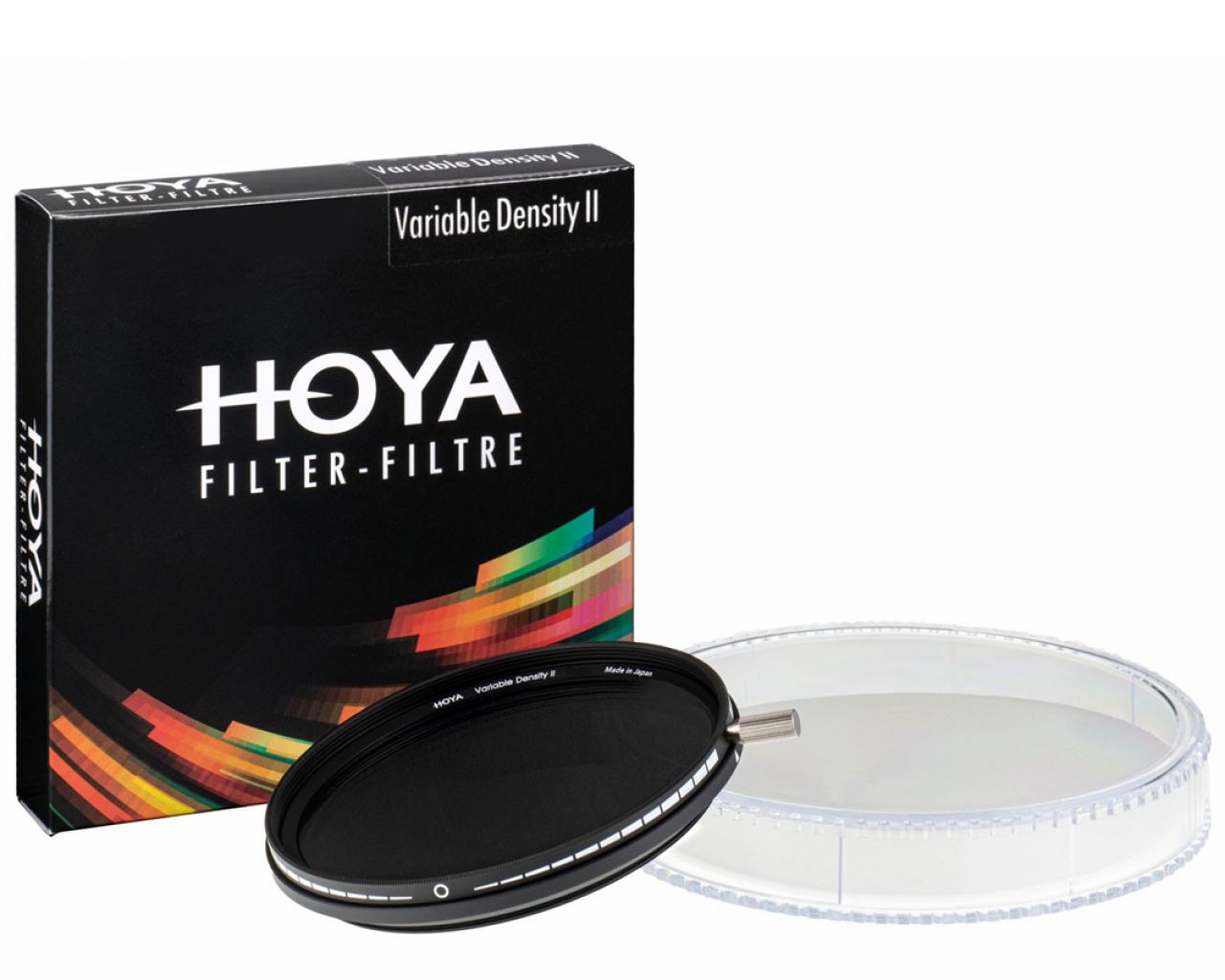
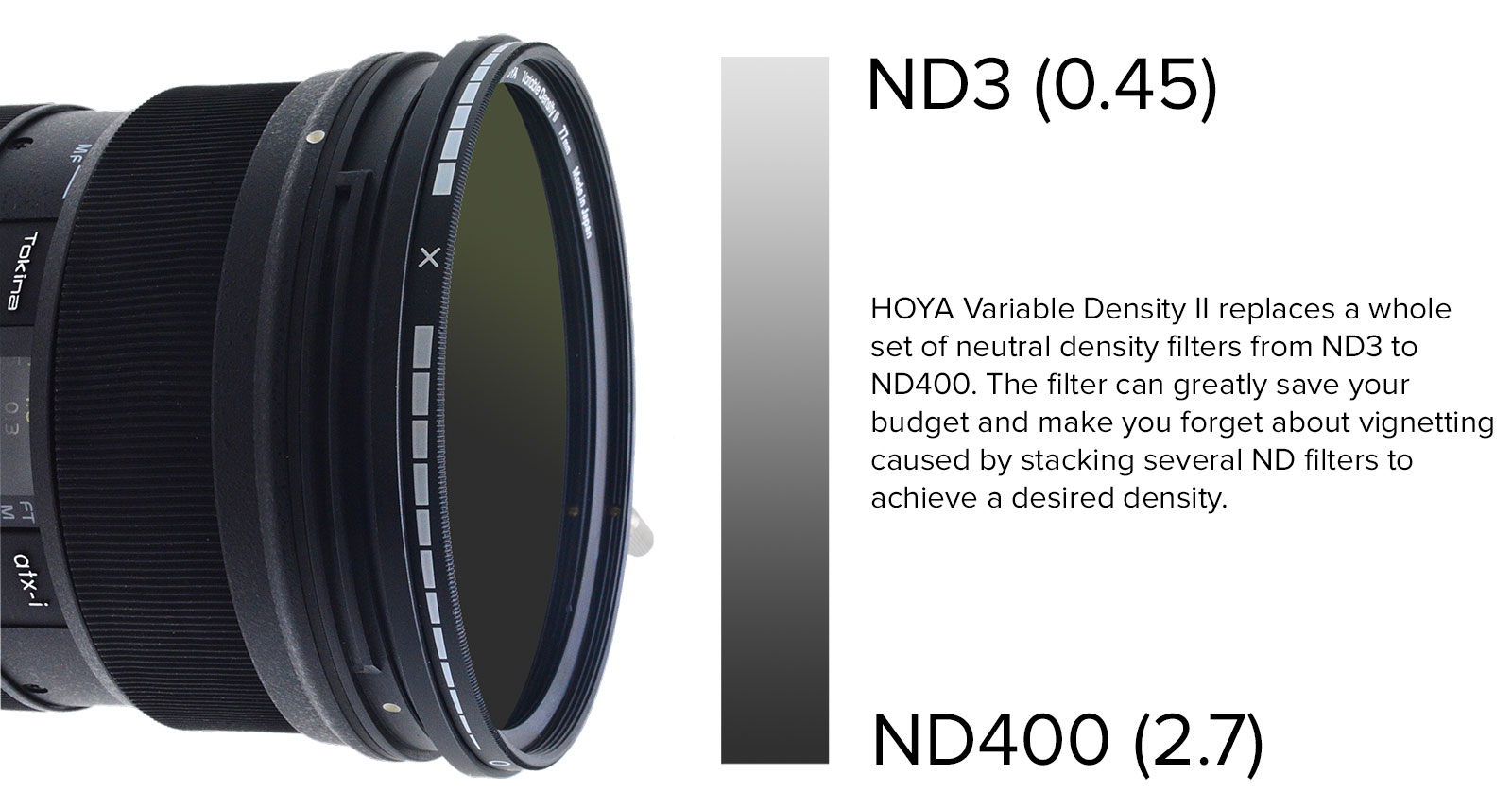
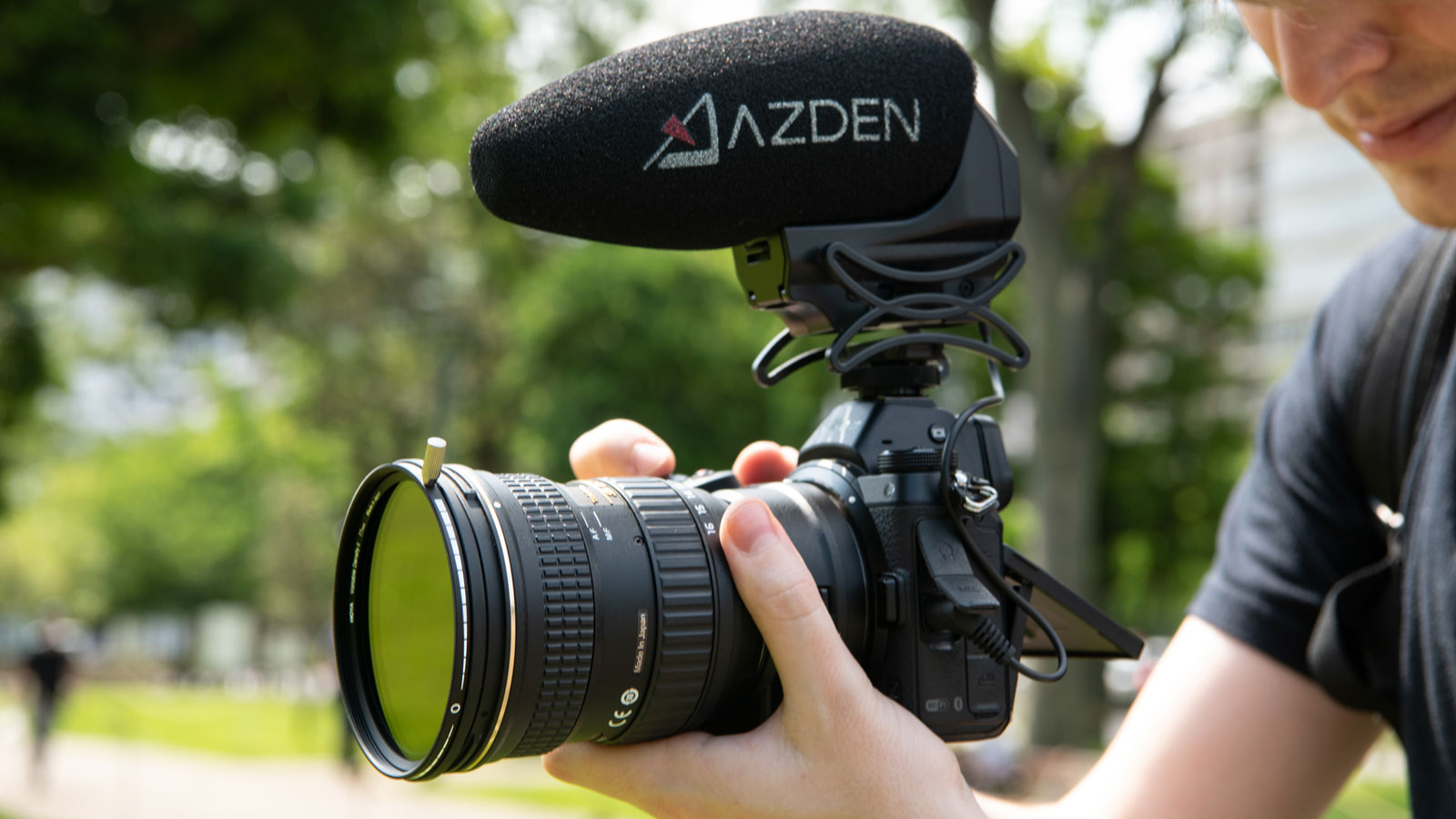
HOYA Variable Density II is an adjustable density filter with an ND range from 1.5 to 9 f-stops (ND3-400).
The difference from the previous HOYA variable density filter is the newly designed rotating frame with a comfortable knob, which allows for better operation.
WHY VARIABLE DENSITY FILTERS ARE IMPORTANT
Variable density filters are widely used because they can replace a range of solid ND filters by providing a density range that can be adjusted to desired exposure settings.
When shooting stills, variable density filters reduce the shutter speed according to the photographer's intentions when it is not possible to reduce the shutter speed due to camera limitations.
Variable density filters can also increase the amount of bokeh when shooting in overexposed conditions, thus preventing overexposure of the image.
In video shooting, it is crucial to maintain a shutter speed appropriate to the frame rate setting. That is, to keep it equal to twice the frame rate for optimal results. This is because, unlike photography, an excessively high shutter speed can create a jarring effect and produce residual images that will not look good in the final video.
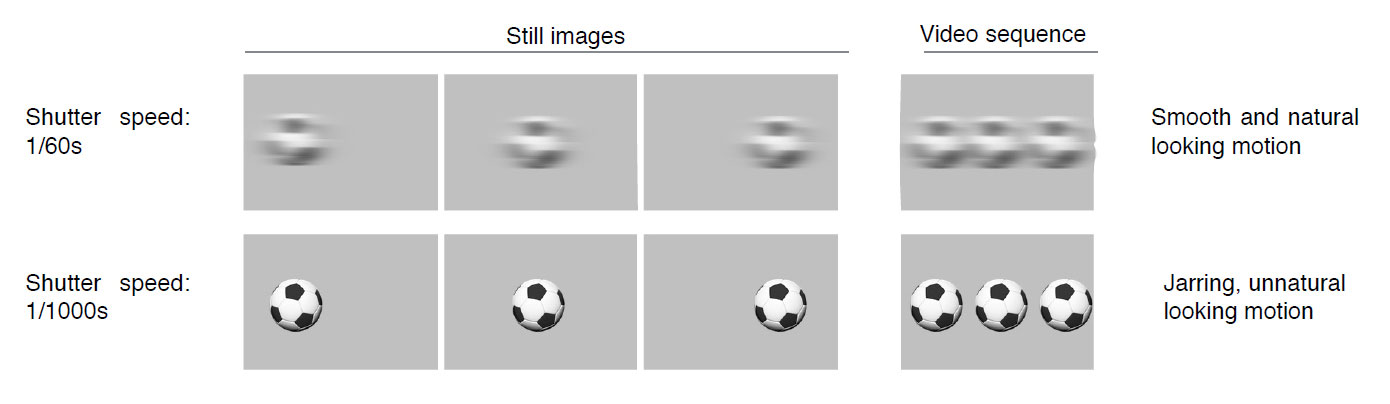
As you can see from the image below, unlike a still image, a video clip consists of a sequence of still images. With a low shutter speed, each still image will appear blurred but will look smooth in the video sequence. Conversely, a higher shutter speed will capture the object solid and sharp, but once in a video sequence all objects will appear separated, creating jarring and unnatural-looking motion.
By using variable density filters, the shutter speed can be adjusted to the correct value to achieve that natural-looking and fluid motion required in video shooting, as shown in the image below.
* When using the filter near or at maximum density, a dark cross-shaped pattern will appear on the image and cannot be eliminated. This is a property of variable ND filters.
HIGHLIGHTED FEATURES
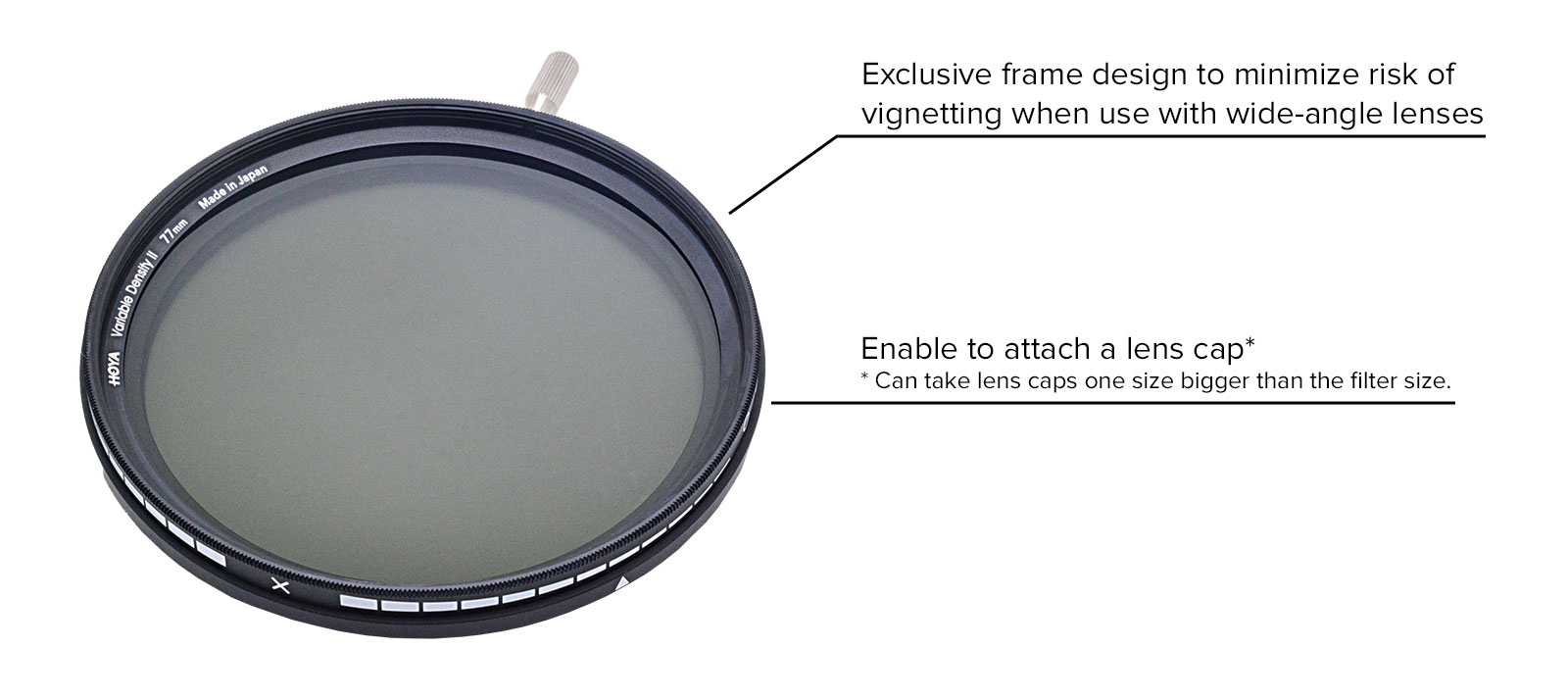
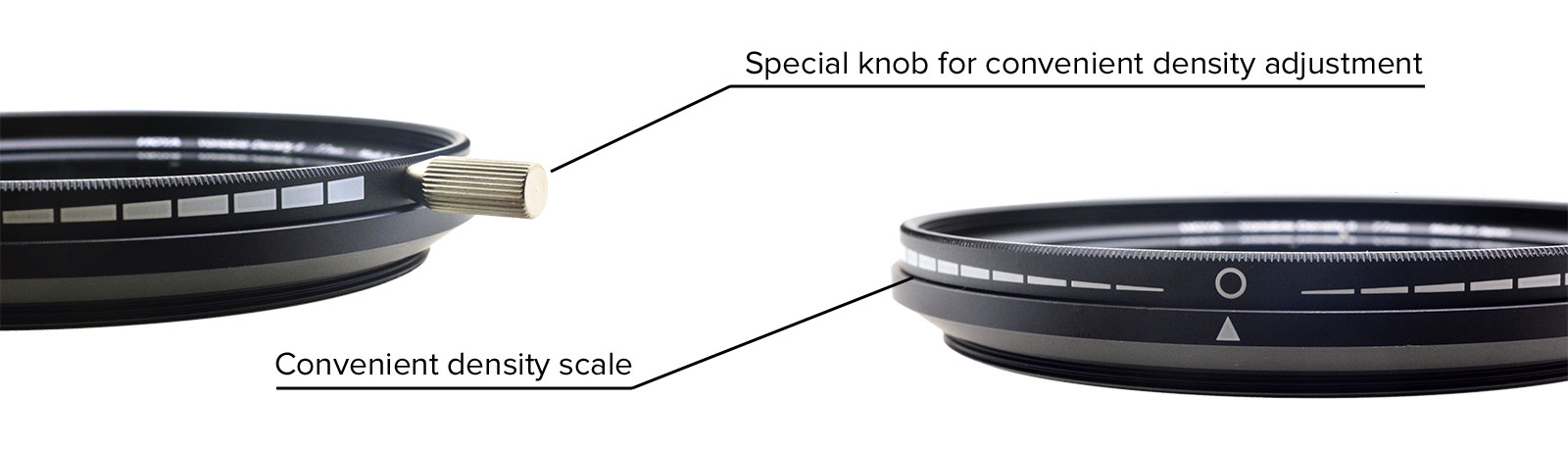
HOYA Variable Density II incorporates a unique rotating frame structure consisting of a fixed frame and a rotating frame. The rotatable mount becomes wider than the fixed mount size to minimize the risk of vignetting when used on wide-angle lenses.
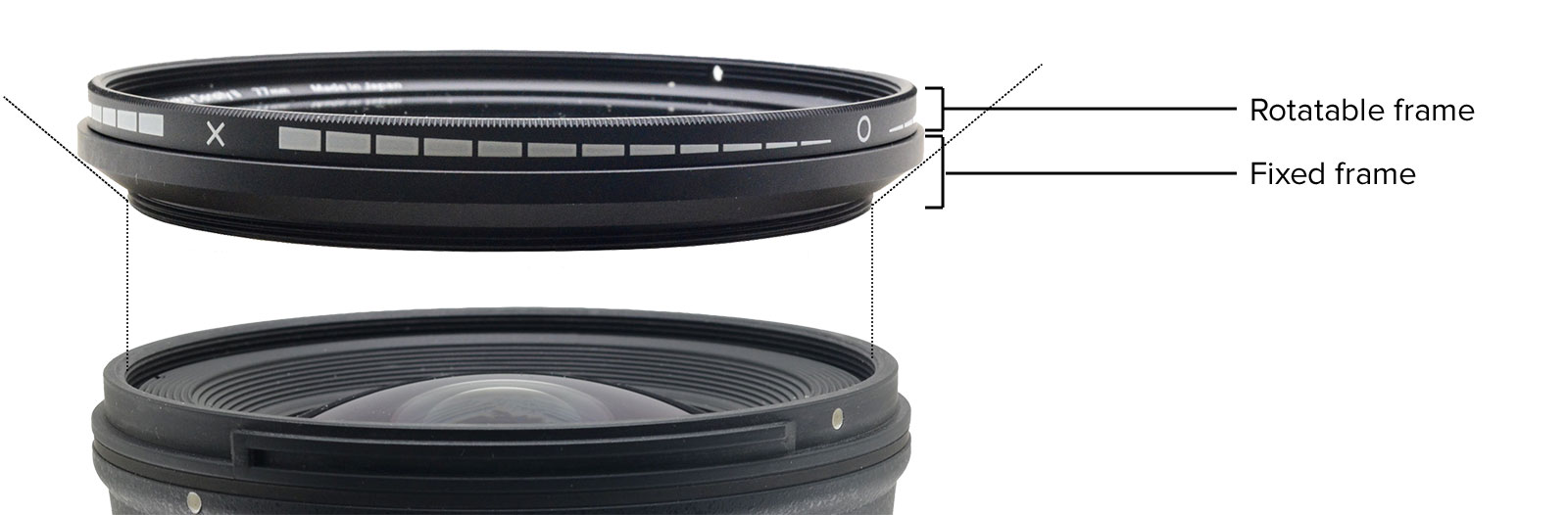
Since HOYA Variable Density II incorporates a complex rotating frame structure, please be aware of the risk of vignetting as follows:
-
APS-C wide-angle lenses with a focal length shorter than 13 mm
-
Full Frame wide-angle lenses with a focal length shorter than 24 mm
LENS CAP COMPATIBILITY
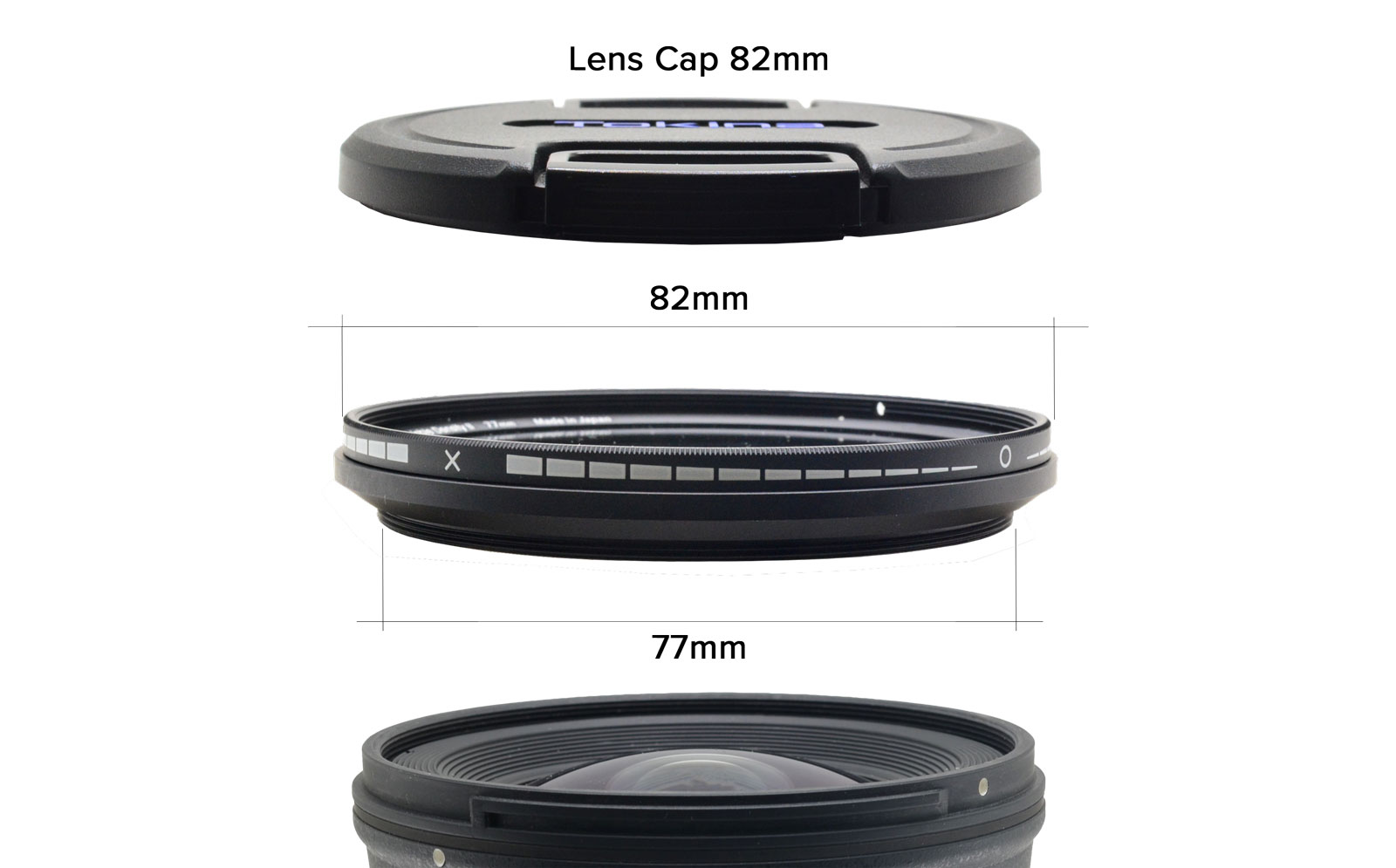
Due to the specific structure of the filter frame, HOYA Variable Density II can accommodate a lens cap one size larger than the filter size itself. For example, the 77mm HOYA Variable Density II can accommodate an 82mm lens cap, as shown in the image below.
BENEFITS
FOR LONGER EXPOSURES
Without changing the aperture, HOYA Variable Density II offers the freedom to change the shutter speed according to the desired effect. Effective for motion blur effects such as waterfalls, cars, or blurred panning movements to make the subject stand out from the background.


FOR WIDER APERTURES
Allows you to use wider apertures in overexposed conditions to reduce depth of field, literally focusing more attention on the subject.


PREVENT OVEREXPOSURE
Even with a shutter speed of 1/8000 second, a wide aperture of f/1.4 or f/1.2 can cause overexposure. With the HOYA Variable Density II filter, overexposure issues can be avoided by adjusting the light input.


FOR SHOOTING CINEMATIC-LOOKING VIDEOS
The variable density filter is an indispensable element for video bloggers and professional video content creators. Allow video cameras/camcorders to set appropriate exposures in bright lighting conditions to achieve a cinematic look.
Notes:
the practical exposure range and light transmission vary depending on the situation. When using the filter near or at MAX, a dark cross-shaped pattern will appear on the image and cannot be eliminated. This is a property of the filter and all variable ND filters.
HOYA Variable Density II is an adjustable density filter with an ND range from 1.5 to 9 f-stops (ND3-400).
The difference from the previous HOYA variable density filter is the newly designed rotating frame with a comfortable knob, which allows for better operation.
WHY VARIABLE DENSITY FILTERS ARE IMPORTANT
Variable density filters are widely used because they can replace a range of solid ND filters by providing a density range that can be adjusted to desired exposure settings.
When shooting stills, variable density filters reduce the shutter speed according to the photographer's intentions when it is not possible to reduce the shutter speed due to camera limitations.
Variable density filters can also increase the amount of bokeh when shooting in overexposed conditions, thus preventing overexposure of the image.
In video shooting, it is crucial to maintain a shutter speed appropriate to the frame rate setting. That is, to keep it equal to twice the frame rate for optimal results. This is because, unlike photography, an excessively high shutter speed can create a jarring effect and produce residual images that will not look good in the final video.
As you can see from the image below, unlike a still image, a video clip consists of a sequence of still images. With a low shutter speed, each still image will appear blurred but will look smooth in the video sequence. Conversely, a higher shutter speed will capture the object solid and sharp, but once in a video sequence all objects will appear separated, creating jarring and unnatural-looking motion.
By using variable density filters, the shutter speed can be adjusted to the correct value to achieve that natural-looking and fluid motion required in video shooting, as shown in the image below.
* When using the filter near or at maximum density, a dark cross-shaped pattern will appear on the image and cannot be eliminated. This is a property of variable ND filters.
HIGHLIGHTED FEATURES
HOYA Variable Density II incorporates a unique rotating frame structure consisting of a fixed frame and a rotating frame. The rotatable mount becomes wider than the fixed mount size to minimize the risk of vignetting when used on wide-angle lenses.
Since HOYA Variable Density II incorporates a complex rotating frame structure, please be aware of the risk of vignetting as follows:
-
APS-C wide-angle lenses with a focal length shorter than 13 mm
-
Full Frame wide-angle lenses with a focal length shorter than 24 mm
LENS CAP COMPATIBILITY
Due to the specific structure of the filter frame, HOYA Variable Density II can accommodate a lens cap one size larger than the filter size itself. For example, the 77mm HOYA Variable Density II can accommodate an 82mm lens cap, as shown in the image below.
BENEFITS
FOR LONGER EXPOSURES
Without changing the aperture, HOYA Variable Density II offers the freedom to change the shutter speed according to the desired effect. Effective for motion blur effects such as waterfalls, cars, or blurred panning movements to make the subject stand out from the background.
FOR WIDER APERTURES
Allows you to use wider apertures in overexposed conditions to reduce depth of field, literally focusing more attention on the subject.
PREVENT OVEREXPOSURE
Even with a shutter speed of 1/8000 second, a wide aperture of f/1.4 or f/1.2 can cause overexposure. With the HOYA Variable Density II filter, overexposure issues can be avoided by adjusting the light input.
FOR SHOOTING CINEMATIC-LOOKING VIDEOS
The variable density filter is an indispensable element for video bloggers and professional video content creators. Allow video cameras/camcorders to set appropriate exposures in bright lighting conditions to achieve a cinematic look.
Notes:
the practical exposure range and light transmission vary depending on the situation. When using the filter near or at MAX, a dark cross-shaped pattern will appear on the image and cannot be eliminated. This is a property of the filter and all variable ND filters.
SKU:HY-VDII 77
Hoya Vario-ND II Filter for 77mm Lenses
- Regular price
- €112,94
- Sale price
- €112,94
- Regular price
-
Hai trovato un prezzo migliore?
HOYA Variable Density II is an adjustable density filter with an ND range from 1.5 to 9 f-stops (ND3-400).
The difference from the previous HOYA variable density filter is the newly designed rotating frame with a comfortable knob, which allows for better operation.
WHY VARIABLE DENSITY FILTERS ARE IMPORTANT
Variable density filters are widely used because they can replace a range of solid ND filters by providing a density range that can be adjusted to desired exposure settings.
When shooting stills, variable density filters reduce the shutter speed according to the photographer's intentions when it is not possible to reduce the shutter speed due to camera limitations.
Variable density filters can also increase the amount of bokeh when shooting in overexposed conditions, thus preventing overexposure of the image.
In video shooting, it is crucial to maintain a shutter speed appropriate to the frame rate setting. That is, to keep it equal to twice the frame rate for optimal results. This is because, unlike photography, an excessively high shutter speed can create a jarring effect and produce residual images that will not look good in the final video.
As you can see from the image below, unlike a still image, a video clip consists of a sequence of still images. With a low shutter speed, each still image will appear blurred but will look smooth in the video sequence. Conversely, a higher shutter speed will capture the object solid and sharp, but once in a video sequence all objects will appear separated, creating jarring and unnatural-looking motion.
By using variable density filters, the shutter speed can be adjusted to the correct value to achieve that natural-looking and fluid motion required in video shooting, as shown in the image below.
* When using the filter near or at maximum density, a dark cross-shaped pattern will appear on the image and cannot be eliminated. This is a property of variable ND filters.
HIGHLIGHTED FEATURES
HOYA Variable Density II incorporates a unique rotating frame structure consisting of a fixed frame and a rotating frame. The rotatable mount becomes wider than the fixed mount size to minimize the risk of vignetting when used on wide-angle lenses.
Since HOYA Variable Density II incorporates a complex rotating frame structure, please be aware of the risk of vignetting as follows:
-
APS-C wide-angle lenses with a focal length shorter than 13 mm
-
Full Frame wide-angle lenses with a focal length shorter than 24 mm
LENS CAP COMPATIBILITY
Due to the specific structure of the filter frame, HOYA Variable Density II can accommodate a lens cap one size larger than the filter size itself. For example, the 77mm HOYA Variable Density II can accommodate an 82mm lens cap, as shown in the image below.
BENEFITS
FOR LONGER EXPOSURES
Without changing the aperture, HOYA Variable Density II offers the freedom to change the shutter speed according to the desired effect. Effective for motion blur effects such as waterfalls, cars, or blurred panning movements to make the subject stand out from the background.
FOR WIDER APERTURES
Allows you to use wider apertures in overexposed conditions to reduce depth of field, literally focusing more attention on the subject.
PREVENT OVEREXPOSURE
Even with a shutter speed of 1/8000 second, a wide aperture of f/1.4 or f/1.2 can cause overexposure. With the HOYA Variable Density II filter, overexposure issues can be avoided by adjusting the light input.
FOR SHOOTING CINEMATIC-LOOKING VIDEOS
The variable density filter is an indispensable element for video bloggers and professional video content creators. Allow video cameras/camcorders to set appropriate exposures in bright lighting conditions to achieve a cinematic look.
Notes:
the practical exposure range and light transmission vary depending on the situation. When using the filter near or at MAX, a dark cross-shaped pattern will appear on the image and cannot be eliminated. This is a property of the filter and all variable ND filters.
Couldn't load pickup availability


Terms and Conditions
Terms and Conditions


